

Art as Function, Automatic Education, and Self-Care: the Politics of Culture Replaced by the Commodification of Creativity
It might be time to live less artfully and make more art.

YOU define what is worth having as a culture, and the world you want to live in. If you can, please support this publication with a donation. If you’re a regular Art Thinkosaurus reader you can support it by becoming paid subscriber (£3.50/month or £2.08/month for £25 upfront).
History is not a happy-ending story, so do support independent voices, be it Art Thinkosaurus or any other research & creative work you enjoy & want more of. Many creatives have been forgotten or stopped working for lack of means.
You can manage your (un)subscription here. If you’re reading an email, remember that you can access Art Thinkosaurus on the Substack App (at the bottom of the email) and explore other essays & articles.
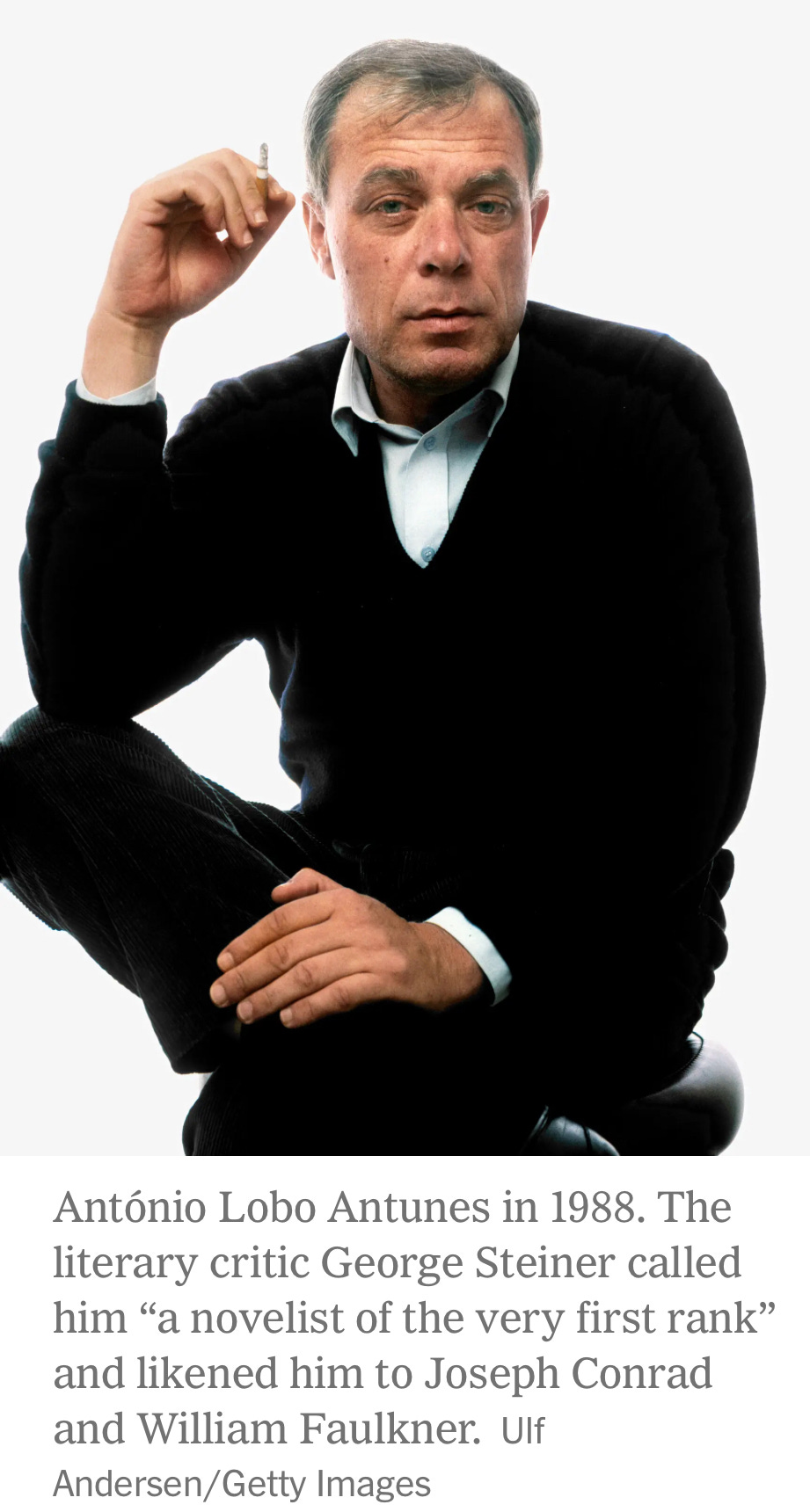
Dedicated to António Lobo Antunes, who passed away 5 days ago.
Shaking Hands with Culture or Art as Political Firework
While, at 17, shaking hands with the French Minister of Education Francois Bayrou, I confirmed my suspicion that I despised any utilitarian views of art and literature. In line with a group of other winners of the Concours Général1, I mumbled a “merci”, astonished not to feel a sliver of delight for playing such a central, albeit numeral part in the political spectacle of meritocracy. Since my mother had earnestly enrolled me in the French Lycée in Lisbon, at age 5, I’d had my fair share of academic accolades, culminating in this ceremony where all the prize winners of all the French schools from the “hexagone” and beyond, gathered to receive their fake leather editions of Victor Hugo’s complete œuvre, a nominal Concours Général certificate and a vigorous salutation. I was pushed into this milieu by an eccentric loophole: the low price of French schools abroad compared to other private ones, and the undying love my mãe had for the French culture and language, which she taught.
A couple of years before the Terminale, this final Lycée year, I had been selected along with another friend and other more distant acquaintances from the same group, to choose a Portuguese writer for an event organized by Jack Lang called La Fureur de lire (“Reading Fury”). Many, many alternative versions of the name were ventured during the flight to Paris, such as Rage d’épeler (“Spelling Rage, good for a spelling bee), La Reurfu de Reli (in verlan, a sort of dyslexic French cockney made up of inverted syllables), Les Lectures Frénétiques (“The Frenetic Readings”), Les Convulsions Orthographiques (“Orthographic Convulsions”)…
By that point, from the name to the selection process, my friend and I considered this whole thing to have been an initiation rite in how cultural representation inevitably disappoints. The path led to Paris, where the most exciting thing that happened was a wave of whispers washing over us with the words “Jack Lang est là” (“Jack Lang is here”) to which a woman reacted by pushing us toward him, saying “he’d rather be with you than with the others”, which sounded cretinous at the time, even to us, and which has now acquired a terrifyingly ominous meaning. We shook hands-which… wait, it just occurred to me that we must be yellowing in several newspaper archives as we speak. In all honesty, I don’t remember photographers, but this operation had all the workings of a photo-op. How many ministers of culture have I shaken hands with before I turned 18?!
Before all this, there was an initial power trip, after which the aforementioned disappointment was swiftly delivered. Supposedly, the students chose their writer. Those were the written rules. My friend an I, the only two Portuguese students (the other two were French, and didn’t read Portuguese literature), excitedly named António Lobo Antunes whose book we’d just read2. During a mostly one-sided and brief conversation, our Portuguese teacher vehemently opposed this choice in light of Antunes’ crude language. Admittedly, a sentence at the beginning of the book came to mind, when Antunes described the smell of posh lady sexual arousal as Chanel nr. 5. Our second choice was José Saramago, whose book Memorial do Convento (“Baltasar and Blimunda”, 1982) we’d adored. This is the moment where your Art Thinkosaurus reading efforts are finally gifted with something of substance: you can now officially brag about knowing who were the backstage operators of Saramago’s Nobel Prize! You’re very welcome! If only I had other tricks like these down my sleeve!
The disappointment continued. After our best mate Jack Lang had joined the ministerial cohort, there was an event so innocuous that I can’t remember a single thing. You’ll be spared my autobiography because between my aphantasia and ADHD only a few anecdotes remain present in my mind from my earlier years. I sport an unencumbered mind, it seems. The only other quite disappointing scene-an enigmatic emotional turmoil which I could only solve recently- was that a few kids were selected to be interviewed and none were me. I was utterly hurt by this evident mistake, a wound laboured by the knife of a voice responding to the question: “pourquoi aimez-vous lire?” (“Why do you enjoy reading?”) with the annihilating, joy crushing response “pour m’évader” (“to escape”).
M’évader?!?!? I had disguised my pain of not being called to the mike-an issue I recently solved by launching a podcast where I interview myself and occasionally others-but this was a toupet, a travesti! I turned into Hercule Poirot out of spite - ha! He’s Belgian messieurs!-and explained to my intrigued peers, from all angles, why it was despicable, a dishonor, really, when you think of it, to read as escapism. Art is life and life is art, I discoursed, it’s an irritant and a balm, it’s verbal psoriasis on the scalp of ennui. “Art”, I would learn later, “is what makes life better than art”: thank you Robert Filliou. That’s when I knew I was doomed and that art was doomed, we’d be poor forever or die at some Venetian biennial. Of which I knew nothing about yet.
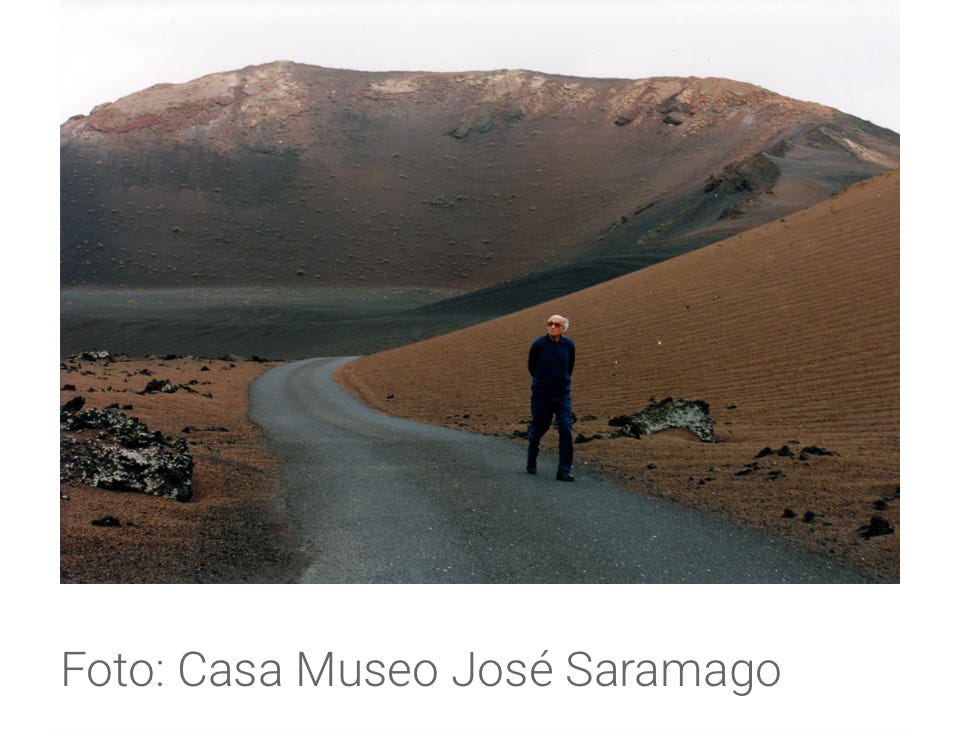
If you’re wondering yes, I became quite popular in school, at 5 years old, then was ignored, then popular again and then, after La Vigueur de Nuire, some considered me scary. But not during this trip where we got along just fine, flabbergasted by none of the writers selected having even been named, explained, or even invited-at least in our presence. You see, we were convinced that we would become best mates with José Saramago, who would subsequently invite us to his island (which was not his in fact; Saramago lived in Lanzarote).
Art as Function, Automatic Education, and Self-Care: the Politics of Culture Replaced by the Commodification of Creativity
All this to say that politics should labour for our existence rather than survival, for art and literature to have its people, spaces and discussions rather than a justification, an exclusive function or a transversal gain. It should be implicit that if it makes even a fraction of the population happy, a string of children and elderly mesmerized, it should be given a platform. Art is not better than pushing numbers, and their symbols activating endless new dynamics encrypting and deciphering the physical world, known as speculative mathematics, or any other means of cutting through reality and expanding it. It’s just a language, like many others. Apparently, we’re good at technology and at signifying, and receiving signs, with which some… escape.
All this to say that I purchased Katy Hessel’s new book “How to Live an Artful Life”, Penguin Books, 2025 for Kindle. I don’t know what I expected, but it wasn’t what I got. Hessel does not enjoy art to escape:
“More expansively, it’s a way of thinking and living which we can learn from artists and apply to our day-to-day existence, whatever and whoever we are. It can exist alongside our day jobs – and even enhance those day jobs.”
I’m not sure whether this book had no editor or two many. That job / job repetition did not sing. The introduction tells us that this is a book for all of us, supporting an artful life that takes its time, uninterested in the speedy response of AI or the crushing pace of modern life. It’s endearingly contradictory when it explains, after claiming the importance of depth and dedication, which require long stretches of time, that each segment, corresponding to a day of the year each, only takes five minutes to read and reflect upon:
“Each entry will take about five minutes of your time to read and think about, encouraging you to slow down, go deeper, and notice the small details in the world around us. Together, the suggestions in this book work against the idea of busyness and unwanted distraction.”
Basically, it’s a cornucopia of very brief instructions that will slow the whole rest of the day down. Yoko Ono’s Grapefruit, but make it useful. There are exactly 366 segments, because we don’t want to risk a bissextile year with an artful day missing.
There is an unexpected little trinket: a minute text about each month before we start our daily art micro-dosing. January is easy, but what is there to write about April, the blandest of months? Ali Smith enlightens us. April comes from “aperire” (to open) in Latin and perhaps Aphrodite, whose volatile temperament is like April’s weather. Then, “think of April like a daisy chain, the connecting month of spring, and focus on Mary Delany’s Chrysanthemum Serotinum (1781) (…)” suggests Hessel, in a blunt transition from daisies to chrysanthemums, from childish insouciance to death. A bit goth.
I go back to January. How do we start the year?
“I like to start the year with Ana Mendieta’s siluetas (…)”
Is Siluetas… a beauty cream? A cocktail I don’t know? In fairness, I don’t know many cocktails. I once went to the Experimental Cocktail Club - aka the Narnia of bars3. It’s a inconspicuous door 🚪 in London’s Chinatown, but somehow I can only find it after walking up and down the street three times. And that’s before having drunk any of those cocktails they have (had? I’m old!) with cucumber. Whenever I mention that one cocktail, the only one I’ve ever tried, people ask me what it’s called. Fuck do I know? I call it “cucumber surprise” and look for the word cucumber in the menu when I go there, utter the magic name, and, like the door, it vanishes from my mind. Maybe I never went there, and this never happened. So, Hessel starts the year with Siluetas, plural! Maybe she doesn’t remember the name of the cocktail either and that’s how she calls it, so more power to her. On the second day of January, because she drank too many Siluetas, she asks what is an artist. Fair, she’s hungover or still drunk and she doesn’t remember. What is it then? I’m interested in what her mnemonic might be. It’s Nick Willing’s very unhelpful definition:
“‘An artist is someone who goes to a place where no one’s been before, and brings back something we/you have never seen before but instantly recognise.’ —Nick Willing, recalling a conversation with his parents, artists Paula Rego and Victor Willing”
He could be describing all of the Iberian conquistadores and it would be the same. In fairness, Paula Rego was Portuguese. So the second of January is literally explaining artists and art to aliens and I’m here for it. Sometimes we must go back to basics.
As any sane person would do, I got curious about my birthday. What is there on the 24th of February? I’m not hungover, so I’m in no state to read the first week of January. “Find freedom”, the title of my day says. I’m suspicious: if anything, a Pisces with ADHD, I’m a loose cannon. I should find a good prison cell with a desk, a bed, a computer, books and a microphone. There is also a cool quote by Katharine Bradford:
“‘I wanted more freedom in my life … I say to myself: look, you wanted a wider experimental kind of life, where you could really free your whole self, especially as a woman …’ —Katherine Bradford”
The dot dot dot is unnerving. What did she do? Did she murder her husband with a frying pan? Did she embrace the drafty life of a nudist? Did she have an affair with yellow? Like all quotes, hers is context-free so, it goes as far as it goes unless we do something with it. But the ensuing question is “why do we want to live artfully?”. So many questions! On my birthday! I’m a person of dedication and convictions, I can’t handle going back like this. It’s like we want to convince people that deep down we don’t quite know what we’re doing, Hessel! It’s like we asked Chat GPT “what are the most asked questions about contemporary art” and it turned out to be “just the one: what is it? Never heard of her”. The answer is to “live with a sense of freedom and outside of societal constraints”, which is precisely what I spent the whole of last academic year telling my MFA thesis student never to write.
How about Diogo [husband]? March is his birthday month, the month where nature is horny and so are humans and that’s why he was born in that time. Pardon me, I got carried away. Let’s rein it in, Joana. See? The last thing I need is to free myself. Anyway, unlike me March does not inspire Hessel. Renewal, rebirth etc. Moving on to the second of March. The title is “Look at the world as an artist might, like a child”, which, if you knew Diogo, is not sound advice. He is an artist, already quite in touch with his inner child. No need to push him over the edge is all I’m saying. Then she recalls having a chat with the ubiquitous writer Elif Shafak who told her a sad tale of asking children in school who wants to be a poet or an artist and they all raise their hands whereas in later years almost no kid does. I mean, we need doctors. Personally, I’m not too worried. In 4 children, I didn’t produce a single lawyer or dentist and ended with offspring who draws, cooks or thinks about prehistoric remains for a living. I could have used an accountant.
A Line for Lifetime
I haven’t finished the book. It’s what could be called an Emily Dickinson reversed: while three lines of Dickinson can last you a lifetime, three lines of “How to Live an Artful Life” can make a lifetime feel too long, especially in those bissextile years. It’s a strange kind of power. I feel it already. The high mindedness at the start of this text feels like an eternity ago. I’m older, mellow, letting go for form perhaps. My mind yields quieter, almost frozen, loose, word fragments. Maybe an escape wouldn’t be the worst thing in the world.


Hessel’s book is a hybrid object, one part self-help book, another part “art for dummies”, and another part book-for-museum-shop, and yet another, more faded and smaller element, the “one poem a day book”. It feels like having a hallucination of all the press releases, all the official art speeches written for politicians at the last minute. It dutifully touches upon all the vague complaints one picks up at the end of a boozy conversation that gets a bit sociological, such as berating AI and the speed of modern-day life. Nothing is a lie, but nothing is true either.
I won the concours Général for the Portuguese language, which a few people told me was not a great achievement since I was Portuguese.
I think it was either “Os Cus de Judas” (1979) or “Memória de Elefante” (1979).
It amuses me to think, and please believe me when I say this, that I have no idea what this place evokes for night people. Passé? Super slick? No clue.
I get so very behind on my reading in general, but I always find myself happy to catch up with your writing, Joana. If being amused is an escape, then so be it. But ... then again, maybe it's just ducking and weaving rather escaping.
Thanks as always, from a fellow Pisces. :^)
HAHAHA I find this your most hilarious writing to date. GENIUS. Please everyone pay this writer so she keeps having the capital and mental means to produce these things.